All Categories
Featured

How Diagnostic Neurology Enhances Healing Outcomes
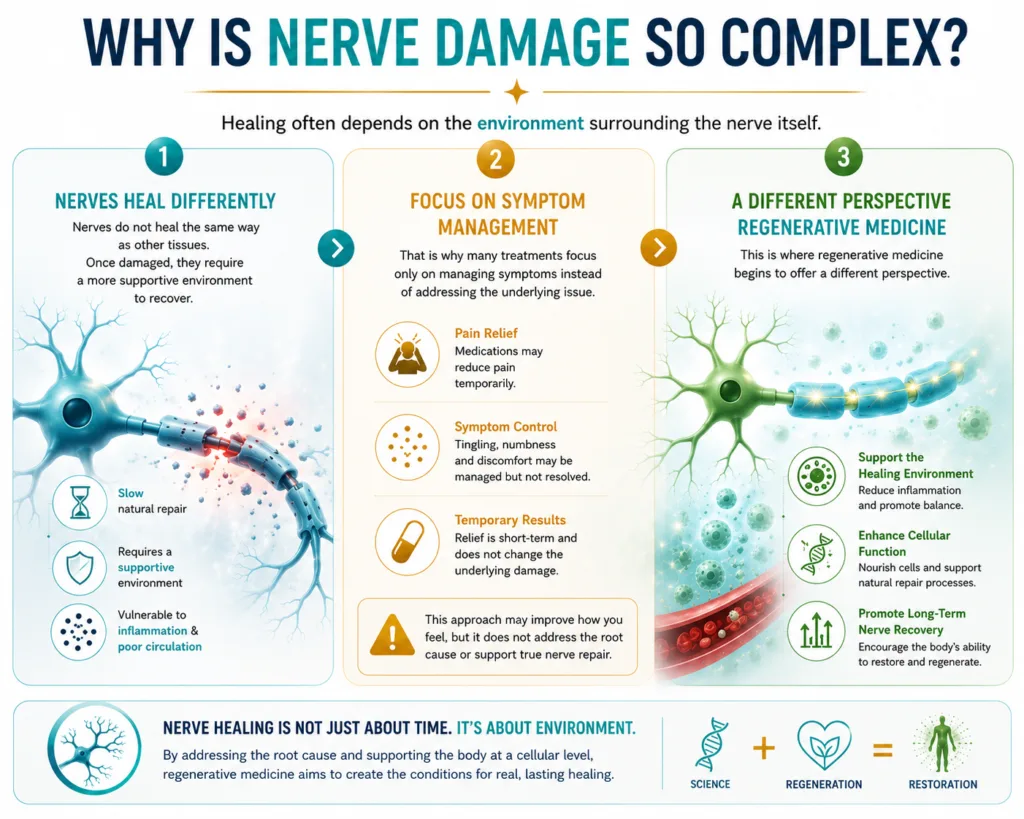
Needle EMG can be utilized to examine motor system recruitment throughout follow-up. Literature reports medications such as tricyclic antidepressants, anticonvulsants(eg, carbamazepine, gabapentin, or pregabalin), or serotonin reuptake inhibitors as proper options. Early recommendation to severe pain services might also be advantageous. Rehabilitation and cortical reeducationincluding motor retraining and sensory therapy are important for optimizing functional healing. Numerous unique adjunctive treatment methods have actually emerged to improve nerve regeneration and practical healing following peripheral nerve injury. The most popular ones consist of: Low-intensity pulsed ultrasound: Mild sound waves stimulate Schwann cells and increase the release of growth elements. Electrical stimulation: Short electrical pulses trigger calcium entry into nerve cells and enhance the production of growth-related proteins. This promotes quicker and more directed axonal regrowth. Photobiomodulation (low-level laser treatment): Light energy increases cell energy(adenosine triphosphate)in mitochondria and promotes the release of nerve development elements. This supports Schwann cell repair and decreases inflammation. This element enhances nerve healing and minimizes discomfort sensitivity. Hyperbaric oxygen treatment: High-pressure oxygen raises tissue oxygenation and supports axon metabolic process. This improves healing and minimizes ischemic injury. Blood-flow restriction training: Quickly restricting limb blood flow increases regional growth signals and muscle regrowth. This enhances weak.
muscles after nerve injury. Peripheral nerve injuries are typically classified utilizing the Seddon and Sunderland systems, which categorize sores by intensity and degree of structural disruption(see Image: Nerve Injury Types). The Seddon classification specifies 3 classifications: Neurapraxia: This type is the mildest and generally results from focal anemia or compression, mostly affecting Schwann cell myelin, leading to demyelination. Since axonal continuity is preserved, muscles do not exhibit atrophy or denervation functions(such as spontaneous fibrillation)on EMG. Scientifically, neurapraxia provides with transient motor weak point and sensory symptoms such as pins and needles, tingling, and/or burning, followed by total spontaneous healing within days to weeks; Wallerian degeneration does not happen. Axonotmesis: This involves axonal disruption with preservation of the perineurium and epineurium, leading toloss of sensory and motor function, manifesting as muscle weak point, atrophy, missing reflexes, tingling, and tingling. Healing takes longer than in neurapraxia however stays possible due to the fact that the undamaged connective tissue structure guides axonal regrowth. The level of spontaneous recovery depends on factors such as the nerve's branching pattern, range to target muscles, and whether it is motor, sensory, or blended. Neurotmesis: Thisis the third and most extreme category and includes complete disruption of both axons and surrounding connective tissues, leading to total practical loss. On the other hand, the Sunderland category has 5 grades based on the seriousness of the injury: Grade I: This grade represents neuropraxia in the Seddon category and includes nerve conduction block triggered by focal interruption of the myelin sheath. The scientific image involves motor weakness(paralysis) and disturbance in joint experience. Wallerian degeneration follows the injury. The healing follows the rule of axonal growth at 1 mm/day, and can be poorif the target neuromuscular endplate is far from the injury website and takes more than 18 months for the growing nerve to reach. Grade III: This grade is associated with endoneurial, axonal, and myelin sheath disturbance; healing is unanticipated and can be complete or poor if intrafascicular fibrosis exists. Grade IV: This grade includes damage to the myelin sheath, axons, endoneurium, and perineurium, while the epineurium stays undamaged. On gross assessment, the impacted nerve appears focally enlarged and indurated. Grade V: This grade represents a total loss of nerve continuity, equivalent to neurotmesis in Seddon's category, and is specified by the total disturbance of axons and all supporting connective tissue layers.Mackinnon later introduced grade VI, describing blended sores consisting of elements of grades I to V within the very same nerve segment. Axons regenerate at an approximate rate of 1 mm (range 0.53 mm )per day. The Tinel indication can be utilized to monitor this progression.Conversely, in higher-grade injuries, axonal regeneration can just begin after Wallerian degeneration is complete. The interfered with nerve architecture in such injuries impedes regrowth, as regenerating axons may misdirect into endoneurial tubes or surrounding tissues. These complications might be disabling, long-lasting, or even irreversible.
The most popular direct complications consist of chronic discomfort, hyperesthesia, cold intolerance, and motor or sensory loss to an extremity, potentially jeopardizing its function. The effect of such injuries can extend beyond the physical. Specials needs caused by PNIs can cause task loss and extra monetary obligations(eg, caretaker expenses).
The most prominent direct complications include chronic discomfort, hyperesthesia, cold intolerance, and motor or sensory loss to an extremity, potentially compromising its function. Nevertheless, the effect of such injuries can extend beyond the physical. Disabilities triggered by PNIs can cause job loss and additional financial commitments(eg, caregiver expenses).
The most popular direct problems include chronic pain, hyperesthesia, cold intolerance, and motor or sensory loss to an extremity, possibly jeopardizing its function. However, the effect of such injuries can extend beyond the physical. Specials needs brought on by PNIs can result in job loss and additional monetary obligations(eg, caretaker costs).
The Evolution of Treating Chronic Neuropathic Pain
The most popular direct problems include chronic pain, hyperesthesia, cold intolerance, and motor or sensory loss to an extremity, possibly jeopardizing its function. Nevertheless, the effect of such injuries can extend beyond the physical. Impairments brought on by PNIs can cause task loss and extra financial commitments(eg, caretaker expenses).
The most prominent direct complications consist of persistent pain, hyperesthesia, cold intolerance, and motor or sensory loss to an extremity, potentially jeopardizing its function. The impact of such injuries can extend beyond the physical. Impairments triggered by PNIs can lead to job loss and additional financial commitments(eg, caretaker expenses).
The most prominent direct complications consist of chronic pain, hyperesthesia, cold intolerance, and motor or sensory loss to an extremity, potentially compromising its function. The impact of such injuries can extend beyond the physical. Specials needs triggered by PNIs can cause task loss and additional financial obligations(eg, caretaker costs).

Latest Posts
Practical Neurological Health Tips for 2026
How Diagnostic Neurology Enhances Healing Outcomes

The Future of Brain Wellness Trends